
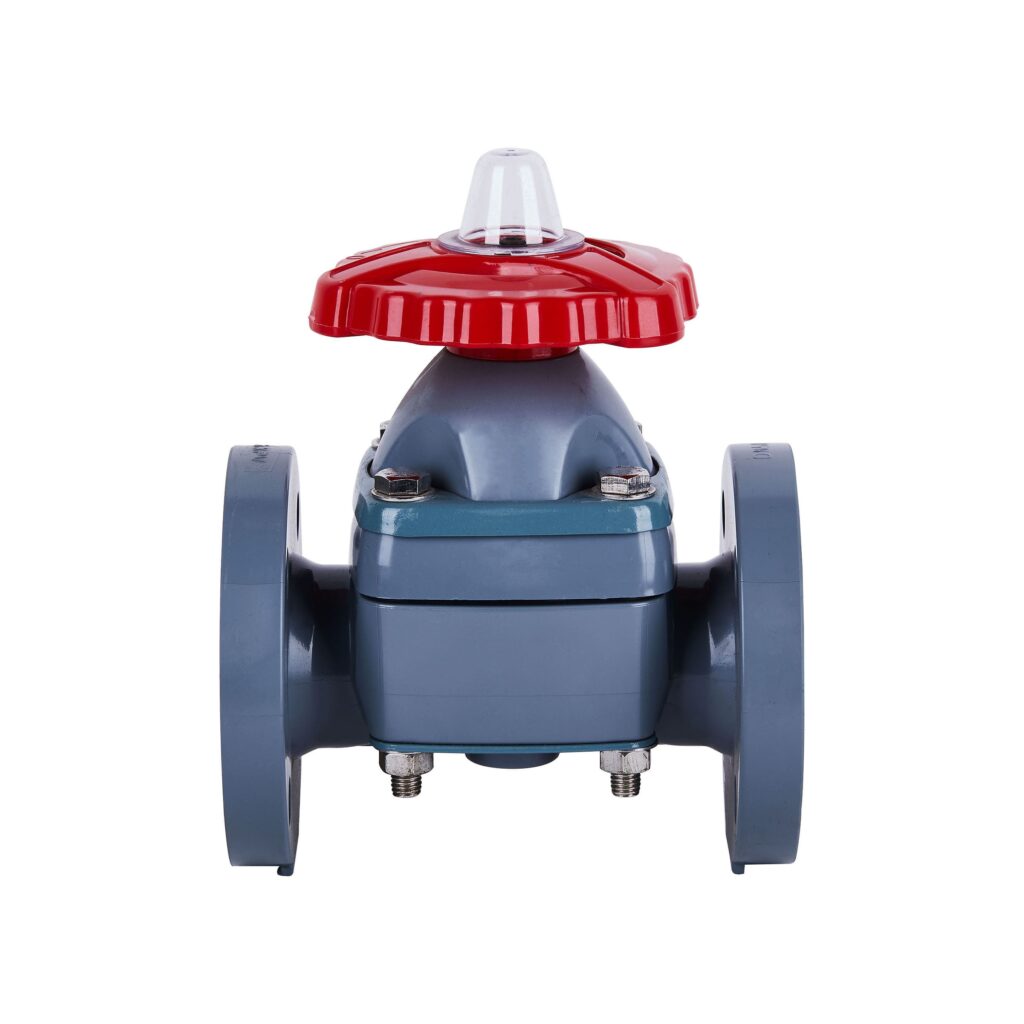
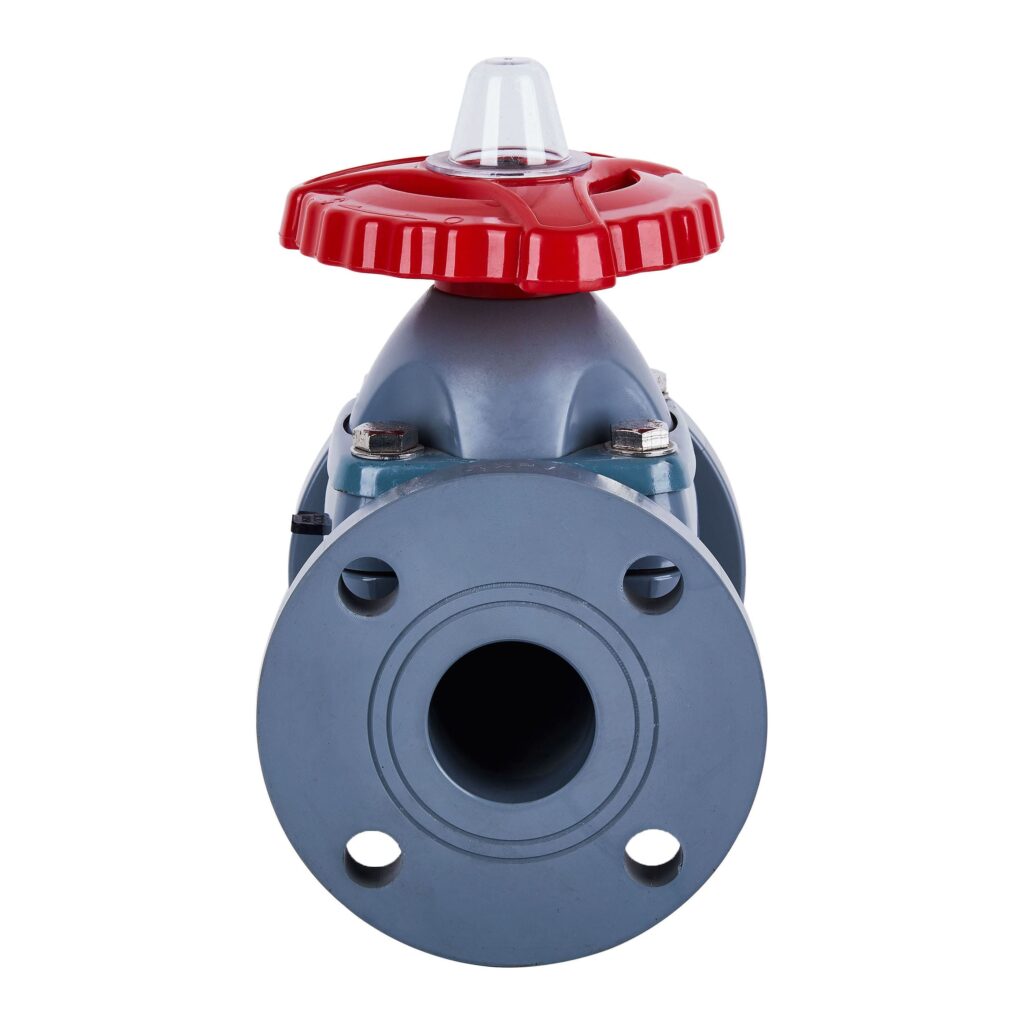
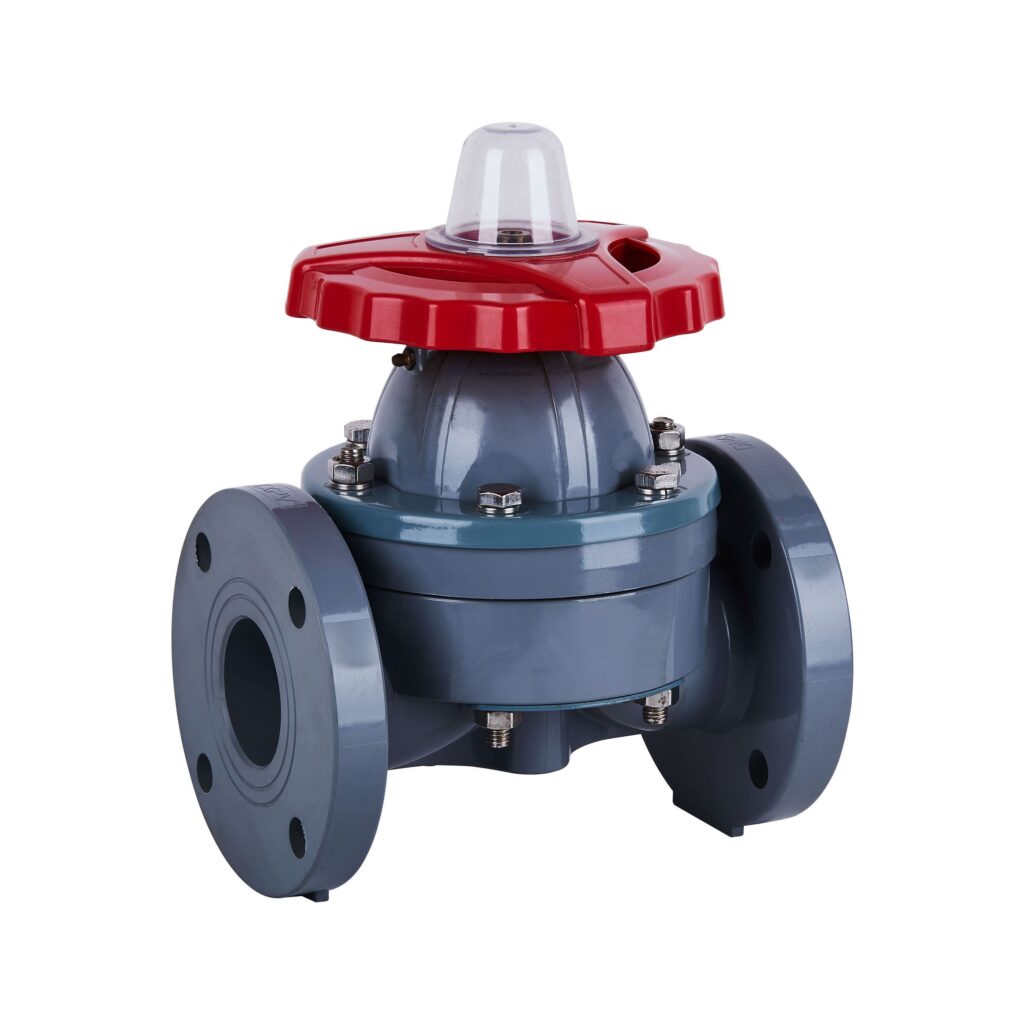
A diaphragm valve operates by using a flexible diaphragm to separate the flow channel from the valve’s actuating components. The diaphragm, usually constructed from rubber or another flexible material, is attached to a stem that extends through the valve body. Moving the stem up or down compresses or relaxes the diaphragm, thereby opening or closing the flow path.
These valves are commonly employed in applications that require isolation between the fluid passage and the operating mechanism to prevent contamination or leakage. They find frequent use in industries such as chemicals, pharmaceuticals, food, and beverages, as well as in cleanroom, sanitary, and sterile environments. Diaphragm valves can also handle abrasive or corrosive fluids, as diaphragms are available in materials resistant to such conditions.
Designed for durability and economical operation, diaphragm valves are offered in a variety of materials, connection types, and flow capacities. They represent a balanced solution in terms of reliability, cost, and performance.
1. The seal diaphragm is made of F46 or PFA, the number of folds is ≥120000 times, and the corrosion resistance is equivalent to F4.
2. Adopting the screw lifting structure, the opening and closing force is huge and the stability is good.